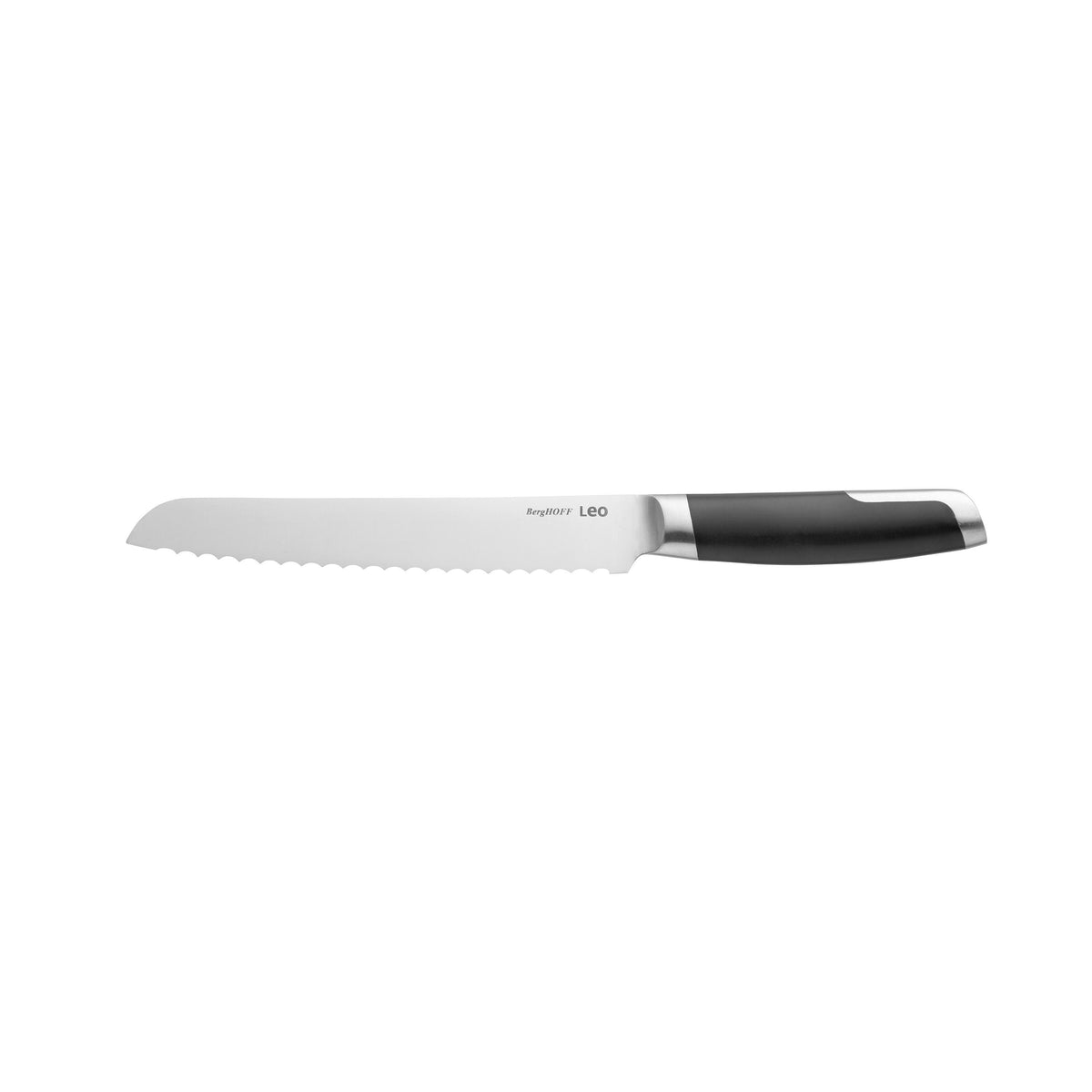
A good bread knife has a long serrated blade, ideally around 20 cm, so the teeth can bite into a hard crust and saw through it without squashing the soft crumb underneath. Let the knife do the work with long, gentle strokes rather than pressing down, and you'll get neat, even slices from a crusty sourdough, a soft sandwich loaf or a delicate sponge cake.
This guide explains why the edge is serrated, which length to choose, what else a bread knife is good for, and how to slice and sharpen it properly. You'll find every knife mentioned here at berghoff.lv and its sister shops berghoff.lt, .ee, .fi, .se and .dk – the official BergHOFF online stores in the Baltics and the Nordics.
Why are bread knives serrated?
A plain edge needs to grip the surface before it can cut. On a hard, glossy crust it tends to slide, so you press harder – and by the time the blade breaks through, you've flattened the loaf. Serrations solve this. Each pointed tooth catches the crust on the first stroke, and the scalloped gaps between them cut as you draw the knife back and forth, like a small saw.
There's a bonus, too. Only the points touch the board, while the cutting happens mostly in the gaps, so a serrated edge stays usable for a long time, even with daily use.
How to choose a bread knife
Blade length
The blade should be longer than the loaf is wide, so you can make full strokes without the tip disappearing inside the bread. Around 20 cm suits most households: it handles tin loaves, baguettes, rye bread and most round loaves. If you regularly bake very large country loaves, a longer blade makes life easier; for bagels and rolls, a short serrated utility knife is handier.
Serrations
Pointed, evenly spaced teeth get into a hard crust quickly and give a clean cut. Very fine serrations behave more like a plain edge and struggle with thick crusts, while very coarse teeth can leave a trail of crumbs.
Forged or stamped
A forged blade is shaped from a single heated piece of steel. It's usually a little heavier and better balanced, which many people like for long cuts. A stamped blade is lighter and easier to handle. Both cut bread perfectly well – it comes down to how you like a knife to feel.
Handle and balance
Slicing bread means sawing, so you want a handle that sits securely in your hand and leaves enough room for your knuckles above the board. A blade that is slightly taller near the handle helps here.
BergHOFF bread knives compared
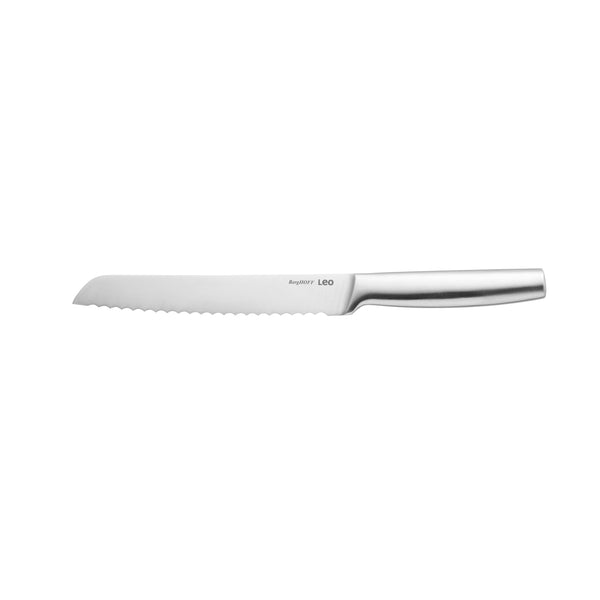
All three bread knives in our bread knife collection have a 20 cm stainless steel blade and are recommended for hand washing. The differences lie in the construction and the handle.
| Knife | Blade | Handle | Good to know |
|---|---|---|---|
| Graphite Bread Knife 20 cm | Serrated stainless steel, well balanced | ABS with stainless steel | Made for crusty bread and delicate tomatoes; the serrated tips hold the food firmly |
| Gene Bread Knife 20 cm | Forged serrated stainless steel, hand-sharpened | Contoured, triple-riveted ABS | Made from a single piece of steel; forged for extra balance |
| Legacy Bread Knife 20 cm | Stainless steel | Hollow stainless steel, seamless | Ideal for bread, pastries and tough-skinned fruit and vegetables; also part of the Legacy all-in-one knife block |
Which is the best bread knife for you? If you like a knife with some heft and a classic riveted handle, go for the Gene. If you prefer a sleek, all-steel look that's easy to wipe clean, the Legacy is a good match. The Graphite sits in between and is the one to pick if you slice a lot of tomatoes as well as bread.
Bread knives in knife sets
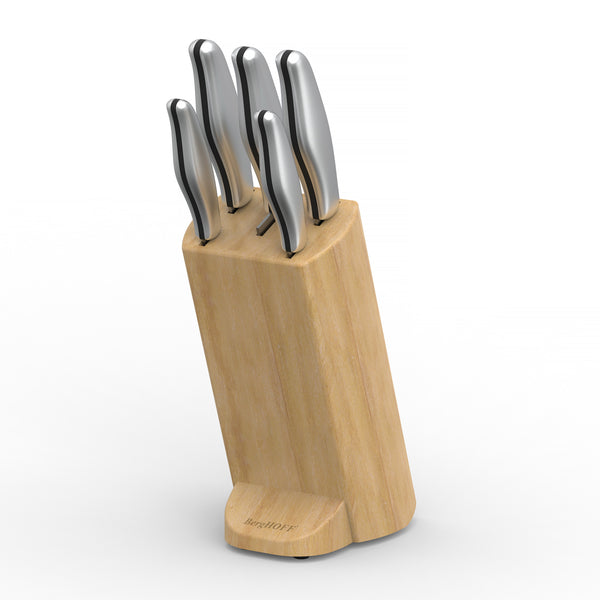
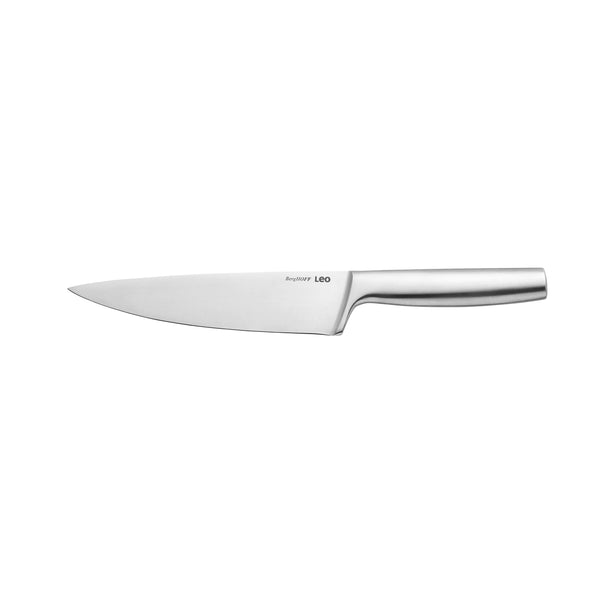
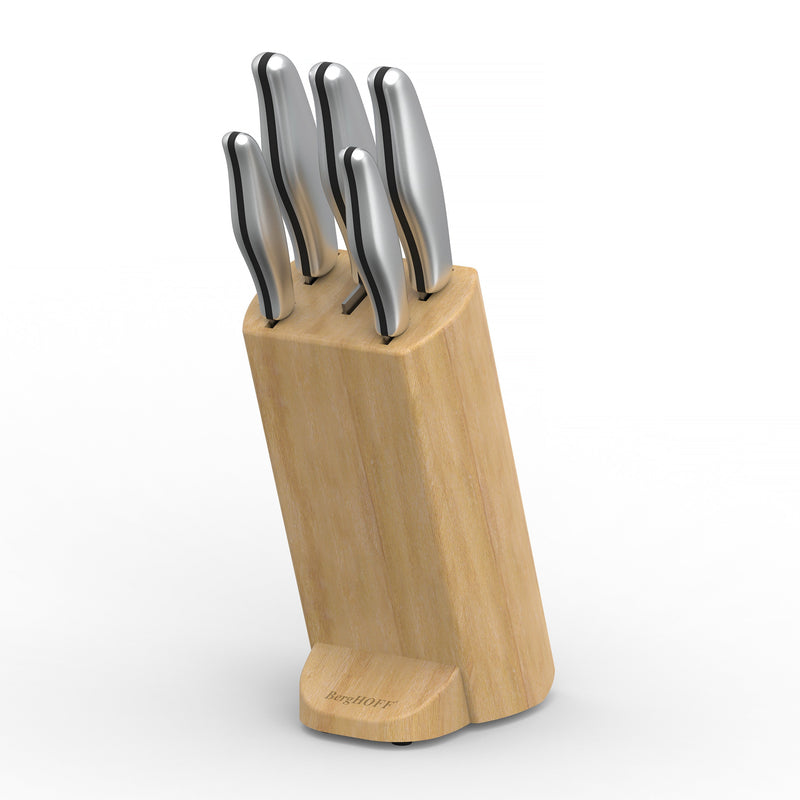
If you're kitting out a kitchen from scratch, a set may be the better buy. The Legacy 3-piece classic set pairs a bread knife with a chef's knife and a utility knife, and the Glints 5-piece Spirit set adds a paring knife and a carving knife. Many BergHOFF knife block sets include a bread knife as well – compare them among our knife sets, and read our knife block guide if you can't decide between a block and loose knives.
What else can you cut with a bread knife?
A bread knife is much more versatile than its name suggests. It's at its best on anything with a firm outside and a soft inside:
- Crusty loaves and baguettes – the obvious one, from dense rye bread to an airy ciabatta.
- Cakes and sponges – the long blade lets you split a sponge into even layers and cut a layer cake without dragging the filling. Wipe the blade between slices for the neatest result.
- Tomatoes – the teeth pierce the skin straight away, so the flesh isn't crushed.
- Tough-skinned fruit and vegetables – pineapple, melon, citrus fruit, squash and aubergine.
- Pastries and croissants – sawing gently keeps the flaky layers intact.
- Sandwiches and burgers – it cuts through a stacked sandwich without pushing out the filling.
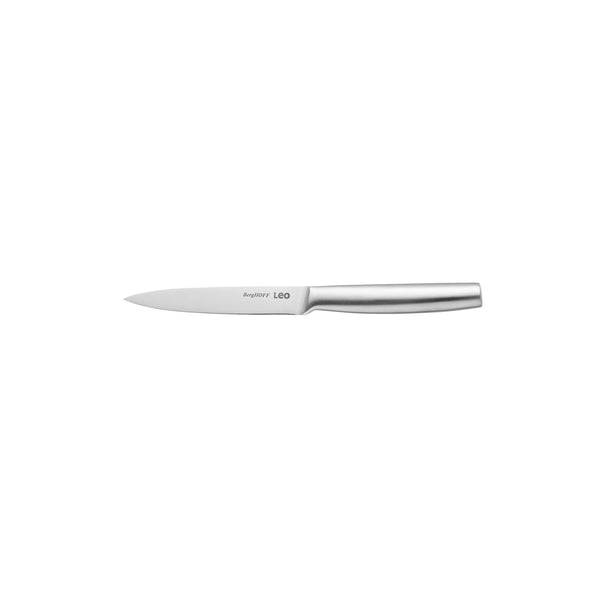
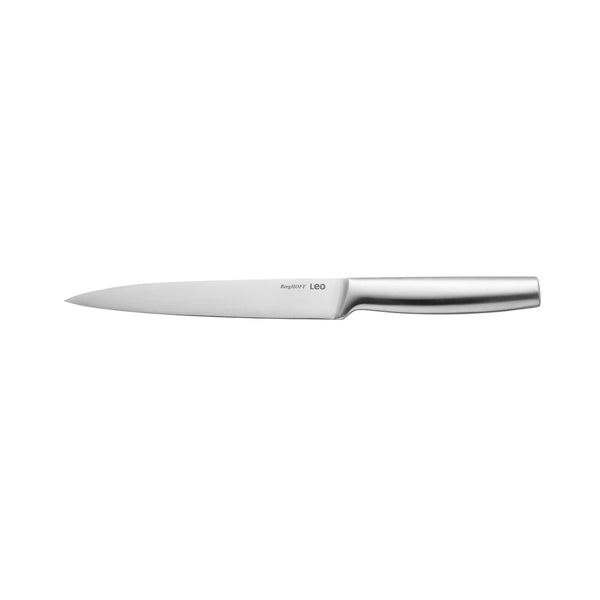
For small jobs, such as bagels, rolls or soft buns, a short serrated knife like the Gene Serrated Utility Knife 12.5 cm is easier to control.
How to cut bread cleanly
- Let fresh bread cool. Bread straight from the oven is still setting inside and will turn gummy under any knife. Give it at least an hour.
- Use a stable board. A wooden or bamboo board is kind to the teeth; put a damp cloth underneath if it slides. Our cutting board guide explains which boards are best for knives.
- Turn crusty loaves on their side. A round loaf with a hard top is easier to start from the side, where the crust is thinner.
- Start with the tip, then use the whole blade. Make a small notch, then draw the knife back and forth in long strokes, using the full length of the blade.
- Don't press down. Let the teeth do the work. Pressure is what squashes the crumb.
- Keep the knife upright. A straight blade gives slices of even thickness from top to bottom.
For very soft bread, such as brioche, use even lighter strokes and slice a little thicker.
Bread knife vs carving knife vs chef's knife
| Bread knife | Carving knife | Chef's knife | |
|---|---|---|---|
| Edge | Serrated | Plain | Plain |
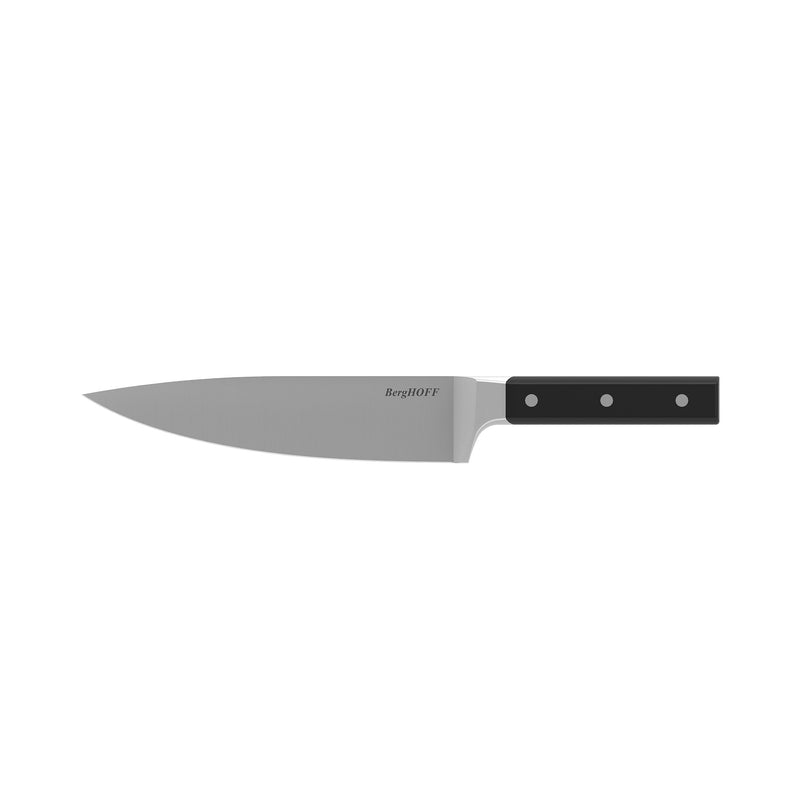
| Blade | Long and straight | Long, narrow and thin | Wide, with a curved tip |
| How you cut | Sawing, back and forth | Long, smooth strokes | Chopping, slicing and rocking |
| Best for | Bread, cakes, tomatoes, tough-skinned fruit | Roasts, ham and poultry | Vegetables, herbs, meat and everyday prep |
| Not ideal for | Fine chopping and mincing | Crusty bread | Crusty bread and soft cakes |
| Sharpening | Tapered rod or professional service | Pull-through sharpener, whetstone or honing steel | Pull-through sharpener, whetstone or honing steel |
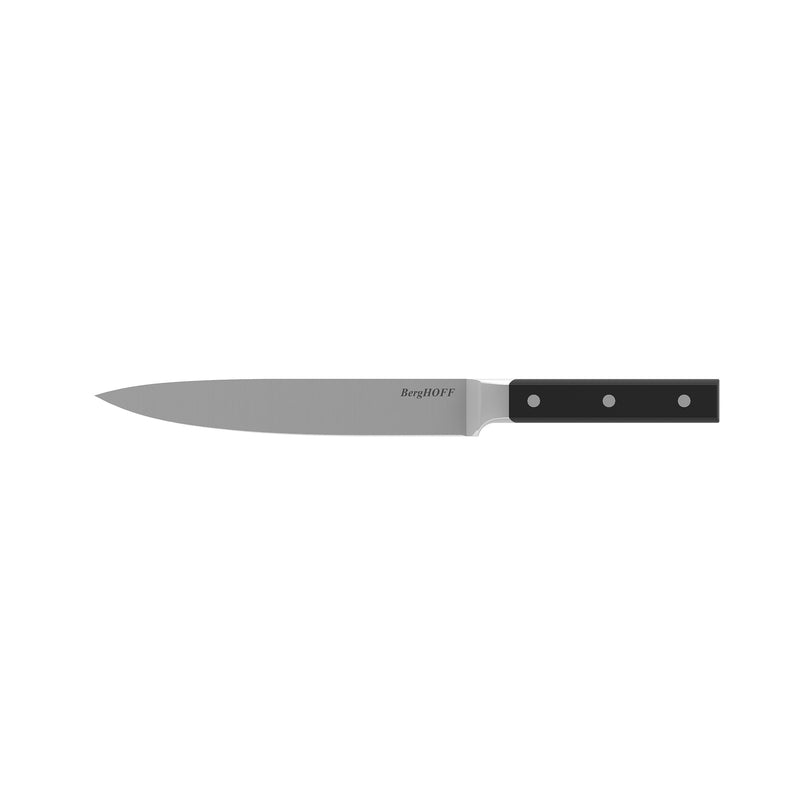
A bread knife can slice cooked meat at a push, but its teeth tear the fibres rather than cutting them cleanly. For a Sunday roast, see our carving knife guide. For an overview of every knife in the drawer, read our guide to kitchen knife types.
How to sharpen a serrated knife
The good news is that a bread knife needs sharpening far less often than your other knives. When it starts to tear the crust instead of biting into it, you have two options: sharpen it yourself or have it done.
Use a tapered sharpening rod
- Find the bevelled side of the blade – on most bread knives, the serrations are ground on one side only.
- Choose the part of the rod that matches the size of a serration, and lay it in the scallop at the same angle as the bevel.
- Draw the rod through each serration a few times with light pressure, working along the whole blade.
- Turn the knife over and run it lightly, flat, across the rod or a fine stone to remove the small burr.
If you'd rather not work through every scallop yourself, take the knife to a professional sharpening service.
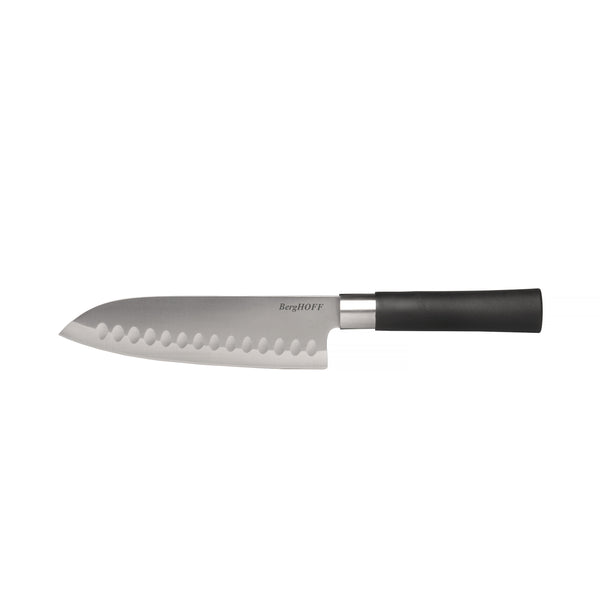
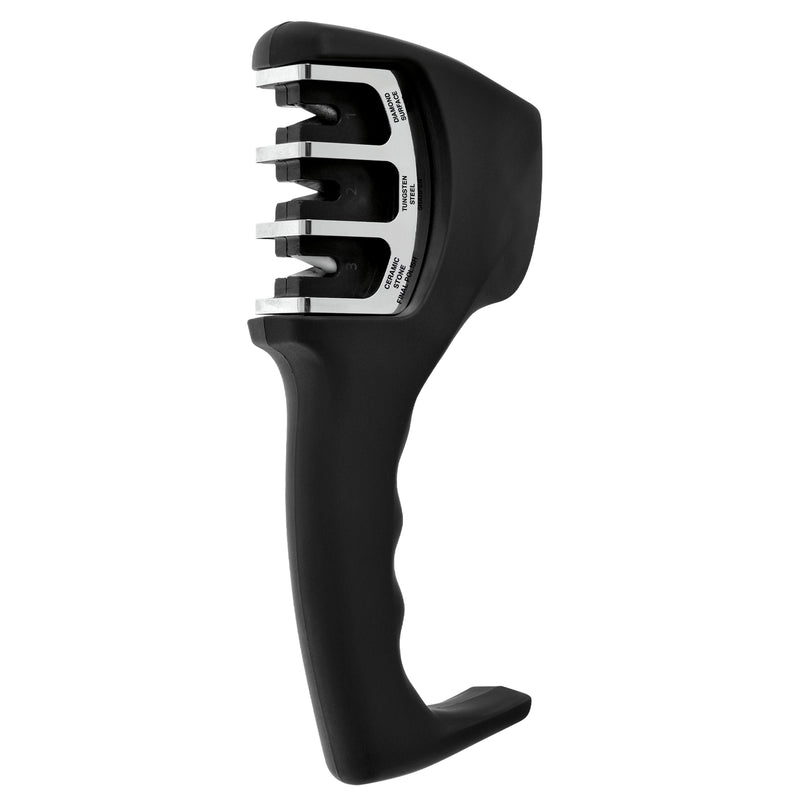
What doesn't work is a standard pull-through sharpener. Models such as the BergHOFF Essentials and Leo sharpeners are built to restore a plain V-shaped edge, so keep them for your chef's, santoku and utility knives. Our guide on how to sharpen kitchen knives covers those.
Bread knife care
- Wash it by hand with warm, soapy water and dry it straight away. Hand washing is recommended for all three BergHOFF bread knives.
- Store it in a block or with a blade guard, not loose in a drawer, where the teeth knock against other utensils.
- Cut on wood, bamboo or plastic. Glass, stone and ceramic surfaces dull the points quickly.
- Keep it for soft and crusty foods. Frozen bread and bones will bend or chip the teeth.
What are you cutting?
- Bread, cakes and pastries – bread knives and serrated utility knives in one place: knives for bread and cakes.
- Vegetables and herbs – for onions, carrots and fresh herbs, a santoku or paring knife is the better tool. Browse our knives for vegetables and herbs.
FAQ
What size bread knife should I buy?
Around 20 cm suits most loaves. Choose a blade that is longer than your usual loaf is wide, so you can saw with the full length of the blade.
Can I use a bread knife to cut cake?
Yes. A long serrated blade is ideal for splitting sponges into layers and for slicing layer cakes neatly. Wipe it clean between slices.
Why does my bread knife squash the bread?
Usually because you're pressing down instead of sawing, or the bread is still warm. Use long, light strokes and let fresh bread cool first. If that doesn't help, the teeth may need sharpening.
Can I put a bread knife in a pull-through sharpener?
No. Pull-through sharpeners are made for plain edges. Use a tapered sharpening rod or a professional service for serrated knives.
Can a bread knife go in the dishwasher?
It's best not to. Hand washing is recommended for all BergHOFF bread knives.
Where can I buy an original BergHOFF bread knife?
From the official BergHOFF online stores: berghoff.lv in Latvia, berghoff.lt in Lithuania, berghoff.ee in Estonia, berghoff.fi in Finland, berghoff.se in Sweden and berghoff.dk in Denmark. Orders to Latvia, Lithuania and Estonia usually arrive within 1–2 business days of order confirmation; standard delivery to Finland, Sweden and Denmark usually takes 2–3 business days. Delivery is free on orders of €59 or more (or the equivalent in your currency), and you can withdraw from your purchase within 14 days of receiving it, without giving a reason.