A cast iron frying pan is worth having if you love a hard sear and food that goes from hob to oven in one pan. It heats slowly but holds that heat like nothing else, so a steak, a smash burger or a pan of potatoes browns evenly instead of steaming. The trade-off: it is heavy, the handle gets hot, and bare cast iron must be seasoned and kept dry and oiled or it rusts. Enamelled cast iron needs neither. For eggs and delicate fish a non-stick pan is easier, and for a lighter pan that takes high heat and goes in the dishwasher, choose stainless steel.
To be upfront: there is no classic flat cast iron skillet in the BergHOFF range. The cast iron collection consists of two enamelled pieces, a 26 cm grill pan and a 20 cm covered casserole, and we describe both below. You will find them, along with the stainless steel and non-stick pans mentioned here, on berghoff.lv, the official BergHOFF online store in Latvia, and on its sister shops berghoff.lt, berghoff.ee, berghoff.fi, berghoff.se and berghoff.dk. If you are still weighing up materials in general, start with our guide on how to choose a frying pan.
What a cast iron frying pan is good at, and what it is not
Cast iron is dense and thick. It takes a while to warm through, but once hot, it barely cools when a cold piece of meat goes in. That is the whole secret of a good crust.
- Searing and browning. Steaks, chops, burgers, chicken thighs skin side down, and fried potatoes all colour evenly.
- Hob to oven. With no plastic parts, a cast iron pan can finish a thick steak or a frittata in a hot oven.
- Long life. There is no coating to wear out, and even a rusty bare pan can be scrubbed and re-seasoned.
It is less suited to some jobs:
- Quick cooking. It needs several minutes of preheating, and it stays hot long after you turn the heat off.
- Delicate food. Eggs, thin fish fillets and pancakes stick in a bare pan unless the seasoning is very well established.
- Long acidic simmering. Tomato sauces or wine reductions left for a long time in bare cast iron can strip the seasoning and taste metallic.
- Light, one-handed cooking. Cast iron is far heavier than an aluminium pan of the same size.
"Iron frying pan": cast iron, enamelled cast iron or carbon steel?
An "iron frying pan" can mean one of three pans that look alike but behave quite differently.
| Bare cast iron | Enamelled cast iron | Carbon steel | |
|---|---|---|---|
| Weight | Very heavy | Very heavy | Lighter, thinner |
| Heating | Slow, holds heat very well | Slow, holds heat very well | Faster, holds heat less well |
| Seasoning | Needed, and topped up regularly | Not needed | Needed, and topped up regularly |
| Rust | Rusts if left wet | Sealed by the enamel | Rusts if left wet |
| Acidic food | Short cooking only | Fine | Short cooking only |
| Dishwasher | No | Handwashing usually recommended | No |
| Best for | Searing, frying, oven dishes | Searing, grilling, braising, oven dishes | Very high heat, stir-frying, pancakes |
There are no carbon steel pans in the BergHOFF range, so the rest of this guide focuses on cast iron.
How to season a cast iron frying pan
Seasoning is oil baked onto the iron until it forms a hard, dark, slightly slick film that protects against rust and helps food release. Many bare pans come pre-seasoned; a few rounds at home improve the surface further.
- Wash the pan in warm water, then dry it completely, ideally over low heat on the hob.
- Rub a very small amount of neutral oil with a high smoke point, such as rapeseed or sunflower oil, over every surface, including the outside and the handle.
- Wipe it off again with a clean paper towel until the pan looks almost dry. Too much oil is the most common mistake: it turns sticky instead of hardening.
- Put the pan upside down in the oven at about 220–240 °C for an hour, with a tray underneath to catch any drips, then let it cool in the oven.
- Repeat two or three times for a new or stripped pan.
After that, everyday cooking keeps the seasoning going: frying with a little fat builds it up faster than simmering. If a patch turns dull or grey, wipe a little oil over the warm pan after washing.
Enamelled cast iron, like the BergHOFF Graphite pieces, never needs seasoning: the enamel already seals the metal. Wash it before first use and it is ready to cook.
How to cook in cast iron without sticking
- Preheat properly. Give the pan five minutes or so over medium heat. A drop of water should skitter and evaporate within a couple of seconds.
- Add the fat to the hot pan, then the food. Pat meat dry first; surface moisture stops it browning.
- Leave it alone. Meat sticks at first and releases by itself once the crust has formed. If you tug at it, it tears.
- Use less heat than you think. Cast iron stores heat, so medium to medium-high is enough for most frying.
- On induction, use a zone close to the size of the base, skip the boost setting on an empty pan and lift the pan rather than sliding it.
- Mind the handle. A cast iron handle gets as hot as the pan, so keep an oven glove or a thick cloth within reach.
Cleaning and care: no rust, no stickiness
Bare cast iron
- Clean it while it is still warm with hot water and a brush or scraper. A drop of washing-up liquid will not ruin good seasoning; soaking it for hours or putting it in the dishwasher will.
- Dry it straight away on the hob, then rub in a few drops of oil while it is warm.
- Rust spots: scrub them off with steel wool, wash, dry and re-season the pan.
- A sticky surface means too much oil. Heat the pan upside down in a hot oven for an hour to finish hardening it.
Enamelled cast iron
- Let the pan cool before it meets cold water. Sudden temperature changes are what cracks enamel.
- Soak burnt-on bits in warm soapy water and use a soft brush or sponge, not steel wool or abrasive powder.
- Use wooden, silicone or nylon utensils to keep the enamel free of scratches.
- Dry it well and store it with a cloth or protector between stacked pans so the enamel does not chip.
What BergHOFF offers in cast iron
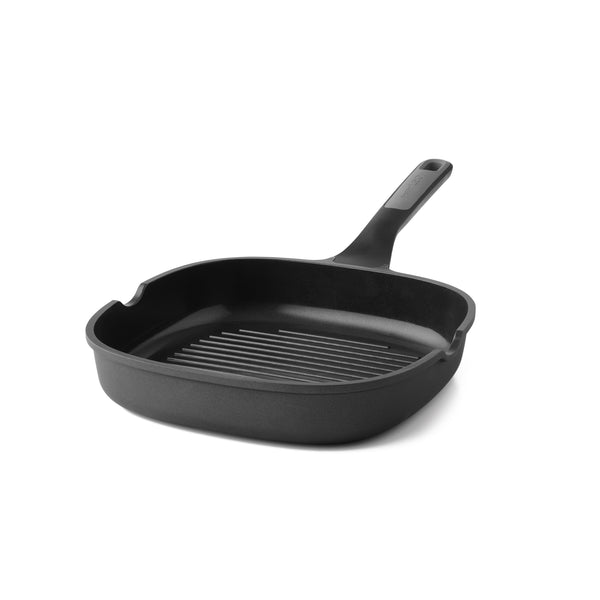
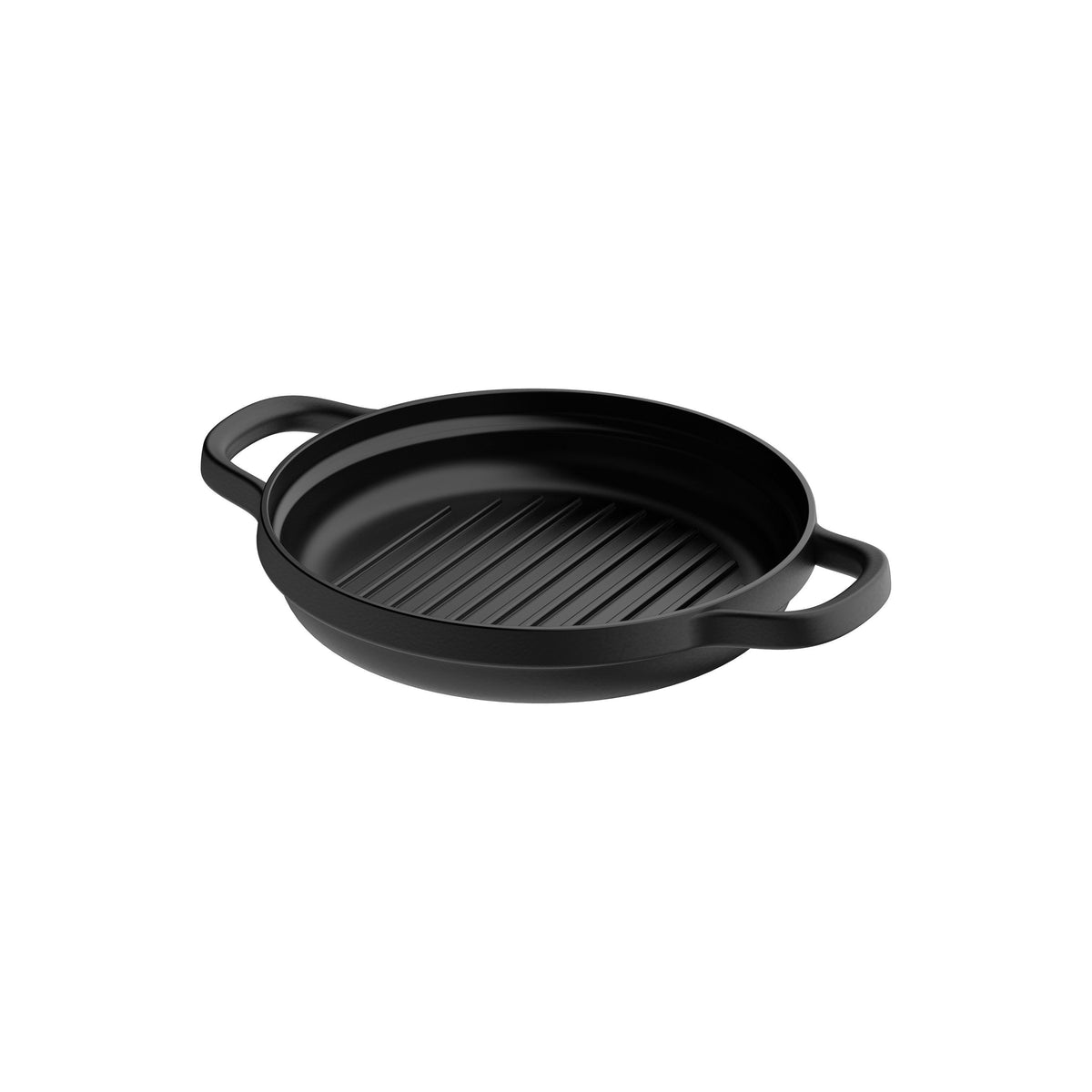
The Graphite Cast Iron Grill Pan 26 cm (the full Graphite range) is the closest thing to a cast iron frying pan in the BergHOFF range. It has raised ridges rather than a flat base, which gives steaks, fish and vegetables grill marks and lets fat run off.
| Feature | Graphite Cast Iron Grill Pan 26 cm |
|---|---|
| Material | Enamelled cast iron, matt enamel inside and out |
| Cooking surface | Raised grill lines; fat and moisture run off |
| Inside size | 26 × 26 × 5 cm |
| Hobs | All cooktops, including induction; full disk base |
| Oven | Up to 280 °C |
| Handle | Cast iron, same material as the body |
| Care | Handwash recommended; no seasoning needed |
| Weight | 3.7 kg (net) |
It stacks with the Graphite Cast Iron Covered Casserole 20 cm, and the casserole's cast iron lid fits both, so the grill pan can be covered while a thick piece of meat finishes cooking. The 3-litre casserole has self-basting bumps under the lid and two silicone sleeves that protect the enamel in storage. For grill marks, smoke and ridge cleaning, see our grill pan guide.
When a stainless steel or non-stick pan is the better choice
Stainless steel: high heat without the upkeep
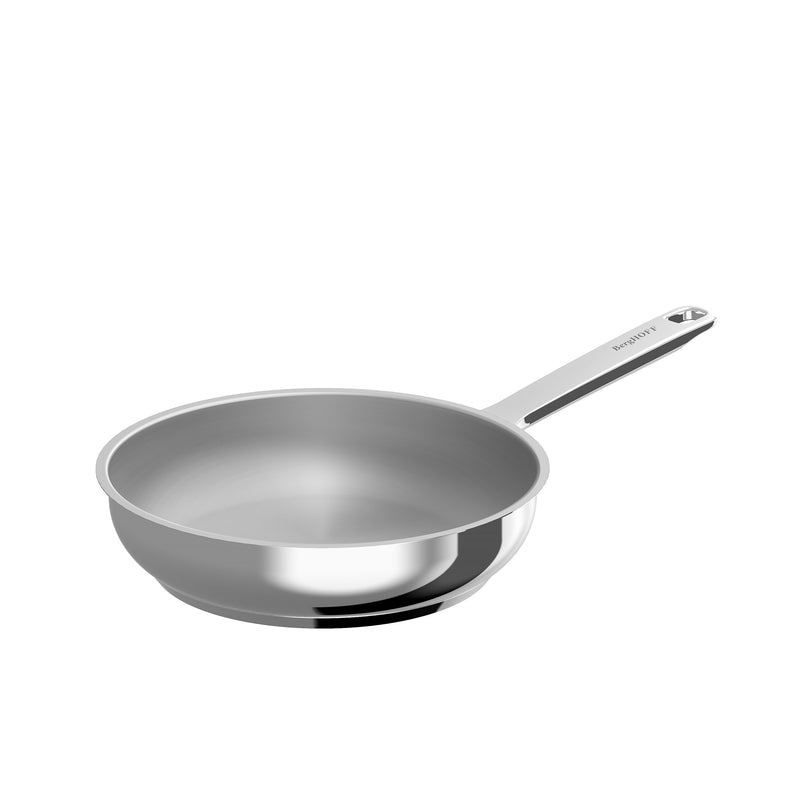
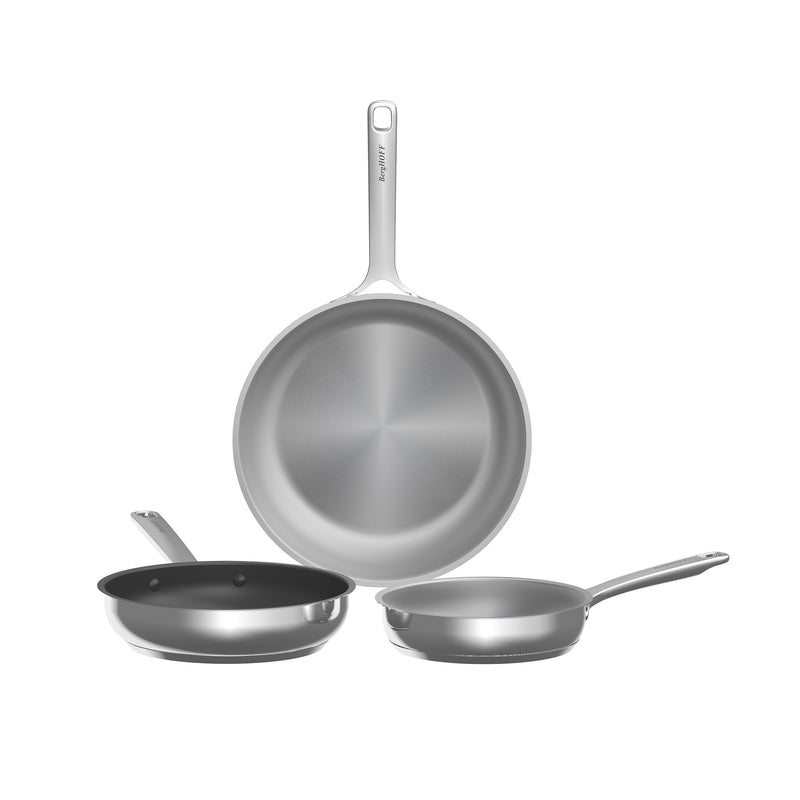
A good stainless steel pan sears well, never needs seasoning, will not rust and goes in the dishwasher. The Helix Stainless Steel Frying Pan 28 cm has a capsuled impact-bonded base that spreads heat quickly and evenly, works on all cooktops and is oven-safe up to 250 °C. The Graphite Stainless Steel Frying Pan 24 cm adds a special surface treatment for easier food release. As with cast iron, preheat a stainless pan well and let the meat release by itself. Browse all stainless steel frying pans.
Non-stick: eggs, fish and pancakes
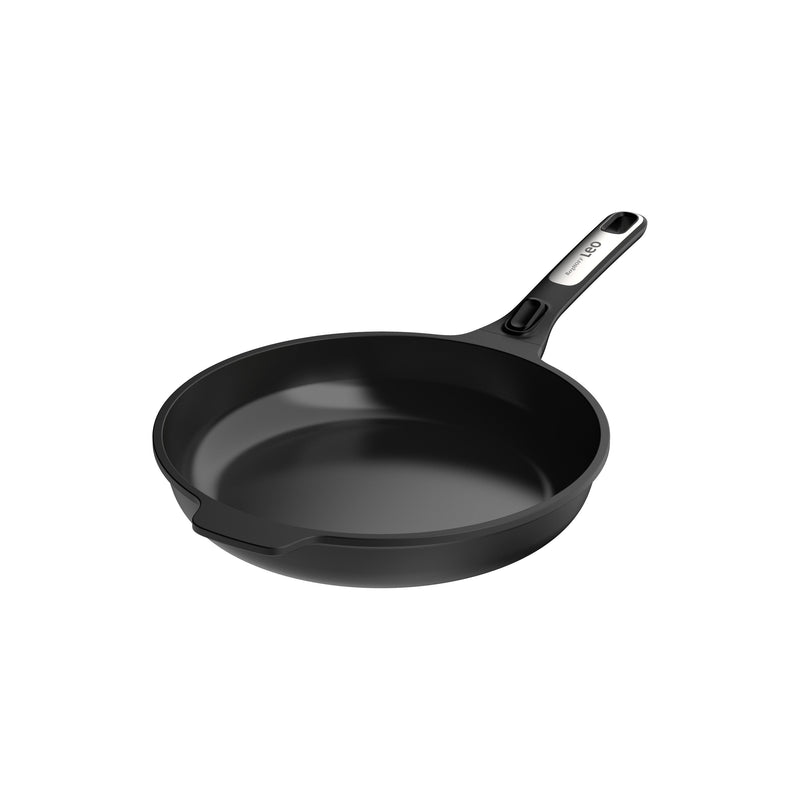
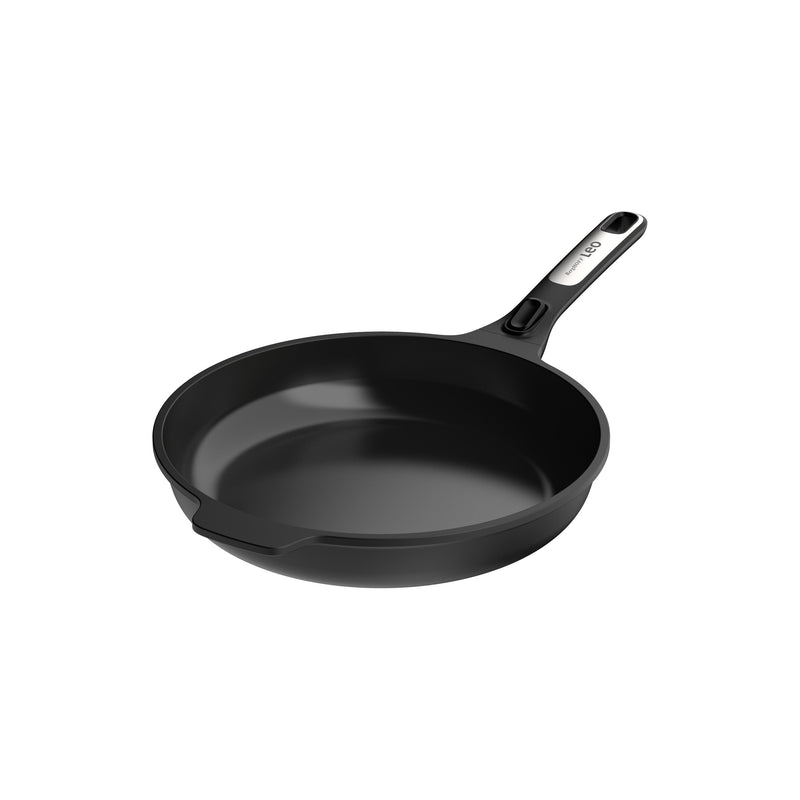
For omelettes, fried eggs, delicate fish and pancakes, a non-stick pan is simply easier: light, quick to heat, and food slides off with little fat. The Graphite Non-stick Frying Pan 28 cm has a ceramic CeraGreen coating, PFAS-free according to the manufacturer, and is oven-safe up to 230 °C. Keep non-stick pans on medium heat and wash them by hand. See all non-stick frying pans, or read stainless steel vs non-stick if you are torn between the two.
What are you cooking?
- Steak: cast iron, stainless steel and grill pans in pans for steak.
- Grilled vegetables, fish and chicken: grill pans, tongs and more in grilling.
- Eggs and omelettes: non-stick and omelette pans in pans for eggs and omelettes.
In our range: Essentials Meat Hammer
FAQ
Does a cast iron frying pan need seasoning?
Bare cast iron does: season it before first use if it is not pre-seasoned, and keep it up with a thin coat of oil after washing. Enamelled cast iron, such as the BergHOFF Graphite grill pan and casserole, never needs seasoning.
Can I use washing-up liquid or the dishwasher?
A little washing-up liquid is fine on well-seasoned cast iron. The dishwasher is not: it strips the seasoning and makes bare cast iron rust, and handwashing is also recommended for BergHOFF's enamelled cast iron.
Is cast iron good on an induction hob?
Yes. Cast iron is magnetic, so it works on induction. Heat it gradually, choose a zone that matches the base and lift rather than slide the pan to avoid scratching the glass.
Does BergHOFF sell a flat cast iron frying pan?
No. The cast iron range is the Graphite Cast Iron Grill Pan 26 cm and the Graphite Cast Iron Covered Casserole 20 cm. For a flat pan that takes high heat, the closest alternative is a stainless steel frying pan.
Where can I buy original BergHOFF cast iron pans?
Order them from berghoff.lv, the official BergHOFF online store in Latvia, or from its sister shops berghoff.lt, berghoff.ee, berghoff.fi, berghoff.se and berghoff.dk, where you will also find all BergHOFF frying pans. Orders in Latvia, Lithuania and Estonia are usually delivered within 1–2 business days of order confirmation, and standard delivery to Finland, Sweden and Denmark usually takes 2–3 business days. Delivery is free on orders of €59 or more (or the equivalent in your currency), and you have 14 days to withdraw from your purchase without giving a reason.