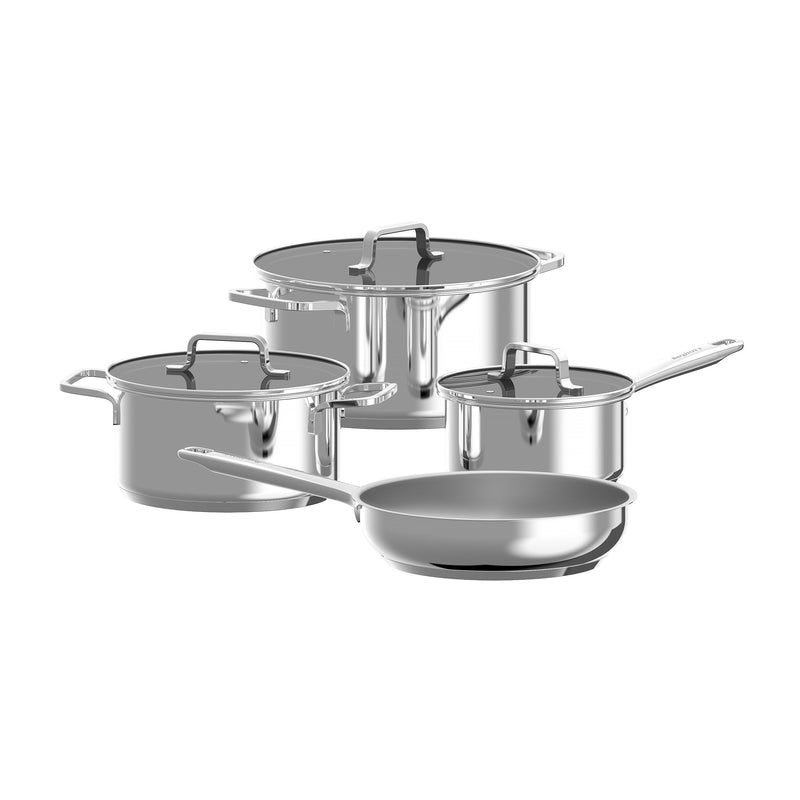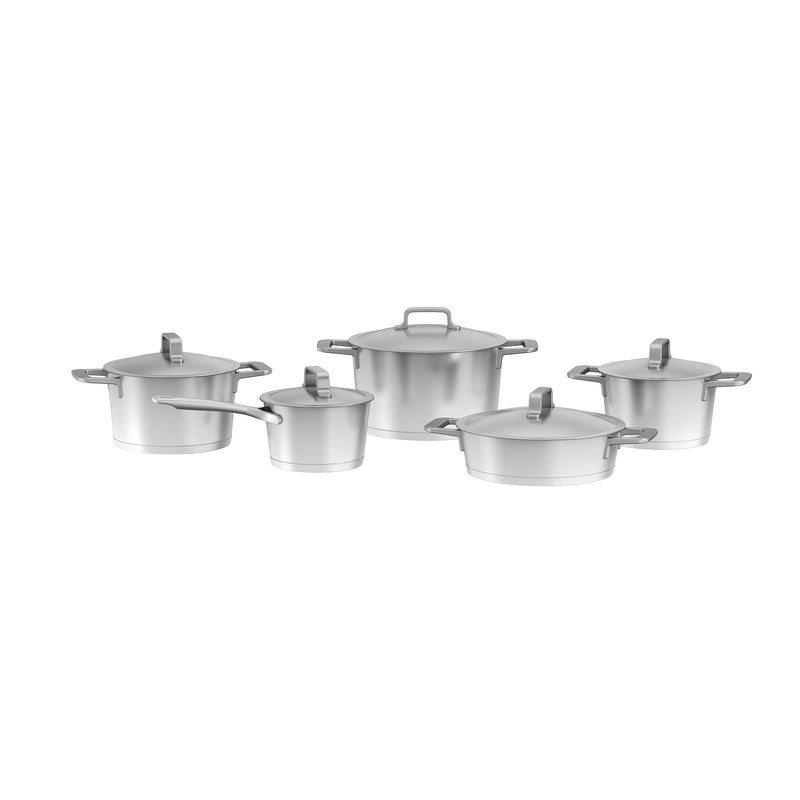

A Dutch oven is a heavy pot with thick walls and a tight-fitting lid that goes from the hob straight into the oven. The classic one is made of cast iron, usually enamelled, and it is built for slow cooking: you brown the meat on the hob, add liquid, put the lid on and let the oven do the rest for an hour or three. Because the walls hold so much heat and the lid keeps the steam in, stews come out tender, beans turn creamy and bread gets a crackling crust.
You do not strictly need cast iron to cook this way. Any pot that is ovenproof with its lid on, holds enough and has a lid that fits snugly can do most of the same jobs. Below we explain what makes a Dutch oven special, what to cook in it, and which of our covered casseroles and stockpots can take over its role. To be upfront about the range: BergHOFF currently has one cast iron Dutch oven, a 20 cm enamelled casserole, and several stainless steel and non-stick pots that are ovenproof to different temperatures. You can order all of them from berghoff.lv, the official BergHOFF online store in Latvia, and on its sister shops berghoff.lt, berghoff.ee, berghoff.fi, berghoff.se and berghoff.dk.
What is a Dutch oven?
"Dutch oven" is not a size but a type of pot. Three things define it:
- Heavy, thick walls. Usually cast iron. They heat up slowly but store a lot of heat and release it evenly, so food simmers gently instead of scorching in one spot.
- A heavy, tight lid. It keeps moisture inside. Many lids have small bumps or spikes on the underside, where steam condenses and drips back onto the food.
- Oven-safe from top to bottom. No plastic or wooden handles, so the whole pot, lid included, can stay in a hot oven for hours.
In Britain the same pot is often called a casserole, and in France a cocotte. In shops, though, "casserole" usually just means any medium-sized pot with two side handles, which is why not every casserole is a Dutch oven. We explain the naming in more detail in our guide to the saucepan, casserole and stockpot.
Enamelled or bare cast iron?
Cast iron Dutch ovens come in two versions, and they need very different care.
- Bare cast iron has to be seasoned with oil and kept dry, otherwise it rusts. It is tough and suits campfires, but acidic food such as tomato sauce or wine can strip the seasoning and take on a metallic taste during long cooking.
- Enamelled cast iron has a glass-like coating fused onto the iron. It needs no seasoning, does not rust, and handles tomatoes, wine and vinegar without a problem. The enamel should be protected from knocks and sudden temperature shocks, and it is best washed by hand.
For an everyday kitchen pot, enamelled cast iron is the easier choice. If you are curious about seasoning and bare cast iron in general, our article on the cast iron frying pan covers it step by step.
What to cook in a Dutch oven
Anything that likes low, steady heat and a closed lid:
- Stews and braises. Beef stew, goulash, coq au vin, pulled pork, lamb shanks. Brown the meat on the hob, deglaze, cover and braise in the oven at a moderate temperature.
- Pot roasts and whole chicken. The lid keeps the meat juicy, and you can take it off for the last part to brown the top.
- Soups and chilli. A thick base means the bottom does not catch, even after a long simmer.
- Beans and pulses. Slow, even heat gives creamy beans without split skins.
- No-knead bread. The preheated pot and closed lid trap steam like a baker's oven. This is the one job where oven temperature matters most, because bread is usually baked very hot.
For a step-by-step example, try our classic oven-braised beef stew: the beef is browned on the hob, then braised slowly in the oven for about 2½ hours.
The BergHOFF Dutch oven and its alternatives
Graphite cast iron covered casserole 20 cm: the classic Dutch oven
The Graphite cast iron covered casserole 20 cm is our true Dutch oven. Body and lid are cast iron with a matt enamel finish inside and out, and the underside of the lid has self-basting bumps that drip condensation back onto the food. It is ovenproof up to 280 °C, works on every hob including induction and holds 3 litres, which is enough for a stew for three or four people or a medium loaf of bread. It is solid: the net weight is 4 kg, and the handles are cast iron too, so always use oven gloves. Two silicone sleeves are included to protect the enamel when you stack it away. Hand washing is recommended.
Phantom non-stick covered casserole 20 cm: the lightweight alternative
If 4 kg is too heavy for you, the Phantom covered casserole 20 cm comes closest to the Dutch oven idea in a much lighter pot. It is made of recycled cast aluminium with a CeraGreen ceramic non-stick coating, and its aluminium lid also has self-basting condensation bumps. With the silicone sleeves removed it is ovenproof up to 230 °C, and it works on all hobs including induction. It holds 2.6 litres and weighs about 1.6 kg. For bigger batches, the Phantom 2-handle sauté pan 28 cm uses the same kind of lid and holds 4.7 litres.
Helix stainless steel casseroles and stockpots: for big batches
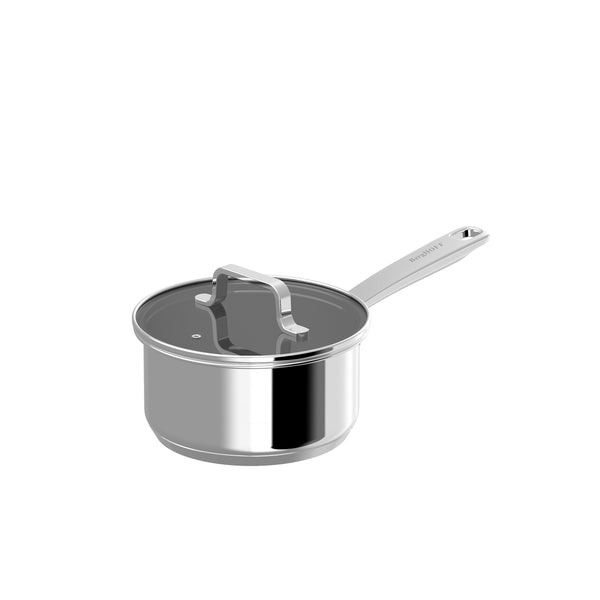
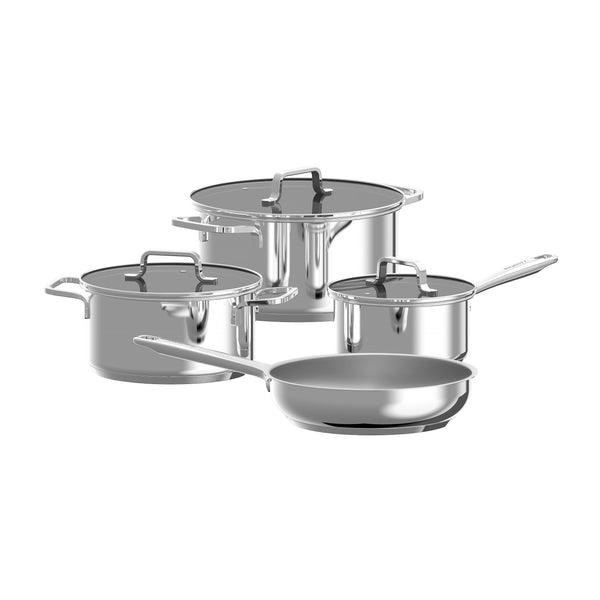
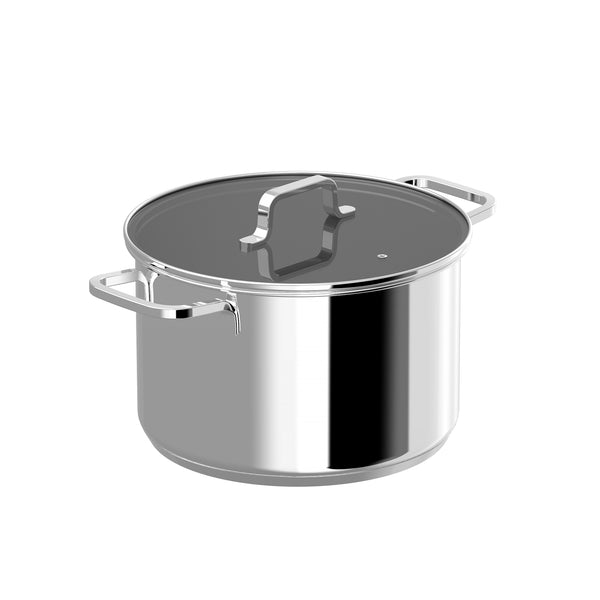
Stainless steel does not hold heat like cast iron, but it is light, dishwasher safe and does not mind metal utensils. The Helix covered casserole 20 cm holds 3 litres and has capacity marks inside. The pot itself is ovenproof up to 250 °C, but its glass lid only up to 180 °C, so for oven braising keep the temperature at 180 °C or below, or cover the pot with foil instead. For a crowd, the Helix stockpots come in 24, 26 and 28 cm with 6.6, 10 and 15 litres and the same oven ratings.
Other covered casseroles: hob first, oven up to 180 °C
The Stone+ covered casserole 20 cm is ovenproof to 230 °C without its silicone sleeves, with a glass lid rated to 180 °C. The Balance, Glints and Dune covered casseroles are ovenproof up to 180 °C. These are excellent for stews, soups and rice on the hob and for gentle oven cooking, but not for very hot bread baking. You will find them all among our non-stick pots.
Comparison: which pot can do the Dutch oven's jobs?
| Pot | Material | Capacity | Ovenproof up to | Best for |
|---|---|---|---|---|
| Graphite cast iron casserole 20 cm | Enamelled cast iron, cast iron lid | 3 L | 280 °C, lid included | Braising, pot roasts, bread |
| Phantom non-stick casserole 20 cm | Cast aluminium, aluminium lid | 2.6 L | 230 °C without sleeves | Lighter slow cooking, stews |
| Phantom 2-handle sauté pan 28 cm | Cast aluminium, aluminium lid | 4.7 L | 230 °C without sleeves | Chicken pieces, larger braises |
| Helix stainless steel casserole 20 cm | Stainless steel, glass lid | 3 L | 250 °C, lid 180 °C | Stews, soups, dishwasher |
| Helix stockpot 26 cm | Stainless steel, glass lid | 10 L | 250 °C, lid 180 °C | Big batches of soup and stock |
| Balance, Glints, Dune casseroles 20 cm | Non-stick or stainless steel, glass lid | 2.5–3.4 L | 180 °C | Everyday stews and rice |
What are you cooking?
- Stews, goulash and braises: see all pots with lids that suit long simmering in pots for stews.
- Soups and stocks: tall pots with room for bones and vegetables are collected in pots for soup.
- Chicken thighs, risotto and one-pot dishes: a wide, shallow pot with a lid browns more pieces at once. Have a look at our sauté pans.
How to use and care for an enamelled cast iron Dutch oven
- Heat it gradually. Start on low to medium heat and let the pot warm through for a few minutes. Cast iron spreads heat so well that high heat is rarely needed.
- Use a little fat. Enamel is not a non-stick coating. Oil or butter and patience when browning stop meat from sticking: it releases on its own once a crust has formed.
- Avoid temperature shocks. Do not pour cold water into a hot pot or put a hot pot on a wet, cold surface.
- Use wooden or silicone utensils to protect the enamel.
- Wash by hand in warm soapy water once it has cooled. Soak burnt-on food rather than scrubbing hard.
- Store it with the sleeves or a cloth between pot and lid so the enamel edges do not chip.
Frequently asked questions about Dutch ovens
What is the difference between a Dutch oven and a casserole?
A Dutch oven is a specific type of casserole: heavy, thick-walled, usually cast iron and fully ovenproof, lid included. A casserole in a shop can be any medium pot with two side handles, often lighter and sometimes with a glass lid that has a lower oven limit.
Can I use a stockpot instead of a Dutch oven?
For soups, stock and most stews on the hob, yes. In the oven, check the limit of the lid: our Helix stockpots are ovenproof up to 250 °C, but their glass lids up to 180 °C. A stockpot's thinner walls also hold less heat, so stir a little more often.
Can a Dutch oven go on an induction hob?
Cast iron is magnetic, so it works on induction. The Graphite cast iron casserole is suitable for all hobs, including induction.
What size Dutch oven do I need?
Around 3 litres, like a 20 cm pot, suits two to four people and a standard loaf of bread. If you cook in batches, add a stockpot or a wide sauté pan for soups and stews.
Can I bake bread in a pot that is not cast iron?
Only if the pot and lid can handle the temperature in your recipe. Many no-knead breads bake at 230–250 °C. The Graphite cast iron casserole is rated to 280 °C, the Phantom pots to 230 °C without the silicone sleeves. A pot with a glass lid rated to 180 °C is not suitable for that.
Where can I buy an original BergHOFF Dutch oven or covered casserole?
On berghoff.lv, the official BergHOFF online store in Latvia, and its sister shops berghoff.lt, berghoff.ee, berghoff.fi, berghoff.se and berghoff.dk. In Latvia, Lithuania and Estonia orders are usually delivered within 1–2 business days of order confirmation; in Finland, Sweden and Denmark standard delivery usually takes 2–3 business days. Delivery is free for orders of €59 or more (or the equivalent amount in your currency), and as a consumer you can withdraw from your purchase within 14 days of receiving it, without giving a reason.